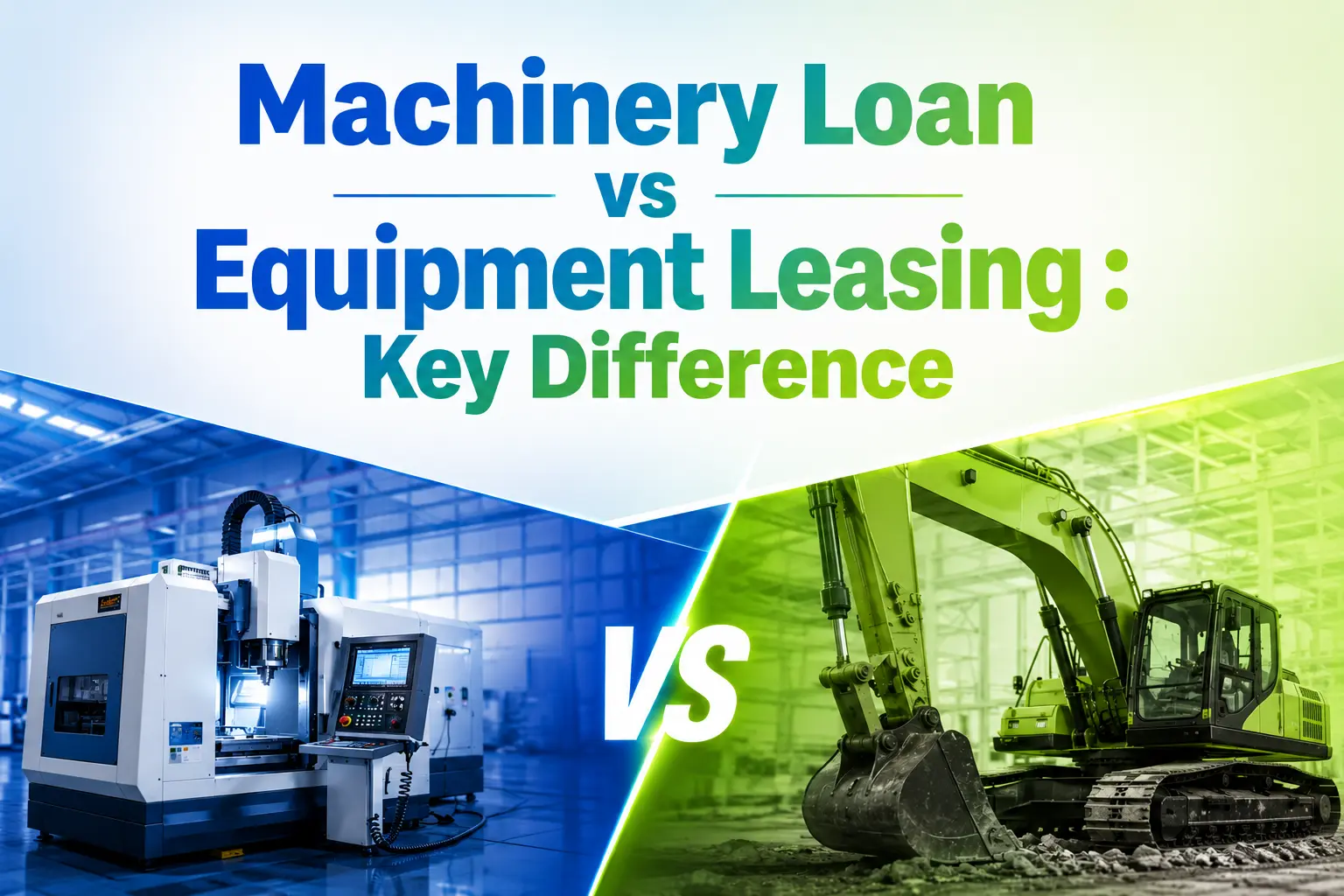
Machinery Loan vs Equipment Leasing : Key Difference
Lease or buy? Are you facing this dilemma? Any growing business requiring equipment goes through this phase while investing in new machinery.
It’s true that buying new industrial machines requires huge investment that can impact cash flow, taxes and long-term profitability of your business. And it is a ticking concern for any growing manufacturing or construction.
Landing a major contract or seeing a sudden spike in market demand is a massive win for any business. However, it quickly exposes a significant bottleneck: your current machinery can't keep up. To deliver on time and maintain your reputation, a major hardware upgrade becomes non-negotiable.
This is the exact point where many business owners run into a wall. Acquiring heavy-duty tools or high-tech systems requires a massive amount of capital. Pulling those funds directly from your daily operations risks choking your cash flow, while doing nothing means leaving money on the table and falling behind competitors.
When looking into business equipment financing, you generally find yourself choosing between two distinct paths to solve this problem: securing a machinery loan or opting for equipment leasing. Making the right choice directly impacts your operational flexibility and your bottom line. Let’s break down the machinery loan vs equipment leasing dynamic so you can choose the right vehicle for your business growth.
What is a Machinery Loan?
A machinery loan is a targeted form of equipment financing where a bank or non-banking financial company (NBFC) provides the capital required to purchase an asset outright. Your business then pays back the principal amount along with interest over a fixed period through regular monthly installments. The defining feature here is ownership. From day one, the machinery belongs to your business, even though the lender maintains a lien on it until the debt is fully settled.
Machinery Loan Benefits
Complete Asset Ownership:
Once the final installment is paid, the equipment is entirely yours. It sits on your balance sheet as a corporate asset, actively increasing your overall business valuation.
Tax Depreciation Advantages:
Because your business owns the asset, you can claim depreciation benefits, which can substantially lower your taxable net income at the end of the financial year.
Total Operational Control:
Ownership means no mileage or usage limits. You are free to modify the machinery for custom workflows or sell it later down the line to recoup residual value.
What is Equipment Leasing?
On the other side of the equipment financing landscape is equipment leasing, which functions similarly to a long-term commercial rental. Instead of purchasing the asset, you sign an agreement with a leasing firm to use the machinery for a specific timeframe in exchange for set monthly payments. You gain full operational use of premium hardware without the long-term obligations of ownership. When the lease expires, you can renew the contract, return the machine, or buy it out at its current market value.
Benefits of Leasing Equipment
Capital Conservation:
Leasing typically avoids massive upfront down payments. This keeps your working capital free for marketing, inventory, or payroll.
Obsolescence Protection:
Technology moves fast. Choosing to leverage the benefits of leasing equipment allows you to rotate out older hardware for the latest models at the end of your term, keeping your production line cutting-edge.
Simplified Expense Tracking:
Lease payments are usually categorized as direct operating expenses. This keeps substantial debt off your balance sheet and keeps your monthly budgeting predictable.
Machinery Loan vs Equipment Leasing: Key Differences
While both options successfully place the required machinery onto your shop floor, they handle your corporate finances in completely different ways.
The primary difference lies in who carries the long-term risk of the asset. With a machinery loan, you take on debt to buy an asset. If that machine becomes obsolete or requires major repairs after a few years, the financial burden falls entirely on your shoulders.
In contrast, equipment leasing transfers that asset risk back to the leasing company. You are paying purely for the active utility of the machinery. Because leasing does not tie your capital up in a depreciating physical asset, your enterprise retains a higher degree of liquidity and can adapt faster to shifting market conditions.
When to Choose Which?
Resolving the machinery loan vs equipment leasing question depends on your specific industry, how fast your technology changes, and your current cash position.
Opt for a Machinery Loan if:
The equipment has a long, stable operational lifespan (like heavy construction machinery or structural fabrication tools) and faces low risk of becoming obsolete.
You prefer to build long-term equity and want the asset reflected directly on your company balance sheet.
You have the necessary cash reserves for an initial down payment without straining your daily operational funds.
Opt for Equipment Leasing if:
The machinery relies on rapidly evolving technology (like high-end medical devices, IT hardware, or digital printing systems) that will need replacing in a few years.
You want to minimize your upfront out-of-pocket costs to keep your business financially agile.
You prefer predictable, fixed operational costs over long-term balance sheet liabilities.
Neither option is universally superior; the right choice depends on your immediate operational needs and your long-term financial strategy. Balancing your current cash flow requirements against your future production goals will point you toward the right path.
To ensure you never miss out on practical financial strategies, industry trends, and expert market breakdowns, stay updated with Infinz for more such financial, educational information insights!